
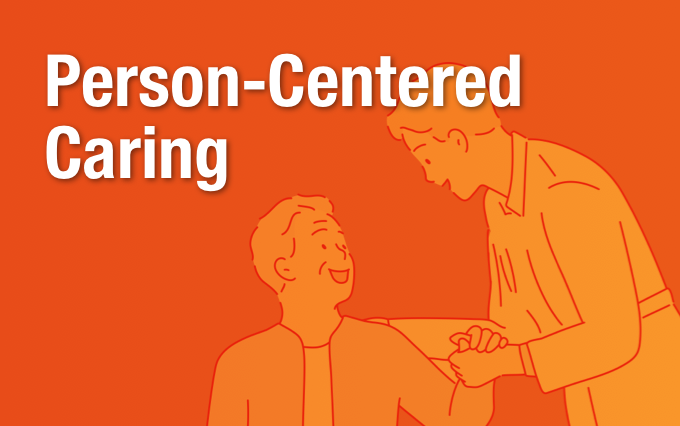
Person-Centered Caring
With the many demands placed upon practicing SLPs, it can become so easy to get bogged down with productivity, keeping up with professional development, and the very real burnout of it all. When this happens to me, I try hard to focus on why I went into this branch of our field in the first place—the patients, and the opportunity we have nearly every day to make a very real difference in their lives.
Years ago, I had a patient that came into the hospital following a fall that resulted in a hip fracture. She failed her swallow screen in the ER, had some other complications, and by the time she was referred to me, she had a nasogastric tube and was nearly frantic with worry over the fact that her birthday was the next day and she wasn’t going to be able to celebrate with her family and have the glass of wine that she always had on “special occasions.”
I got her in to radiology for an MBSS and found a pretty perfect swallow, and after checking with her care team, made sure she got that glass of wine on her birthday with her family who all came to visit the next day. It was obviously a really rewarding experience for me, but most importantly—a reminder that we really need to find out what is TRULY important to the PERSON when setting a plan of care.
If you, like me, are a little worn out, here are some great resources to remind you that person-centered care is not only rewarding, but the reason we probably went into this field in the first place!
An article by Dr Nicole Rogus-Pulia and Dr Emily Plowman (read anything you can by these two researchers!)
Shifting Tides Toward a Proactive Patient-Centered Approach in Dysphagia Management of Neurodegenerative Disease
This great podcast from Swallow the Gap (which I discussed last month, so please check our website if you missed that one!)
Beyond the Bedside: Humanizing Healthcare in the ICU featuring Sam Walker, MS, CCC-SLP, TSSLD, and Jo Puntil, MS, CCC-SLP, BCS-S, ASHA-F
And this wonderful course offered by MedBridge, presented by Yvette McCoy, MS, CCC-SLP, BCS-S and Karen Sheffler, MS, CCC-SLP, BCS-S
Reframing Dysphagia Documentation With a Person-Centered Approach
Recent Posts:
Cheers to Three Years!
It’s so hard to believe that I have been sharing resources for THREE years now! Thank you to the many clinicians who responded to my polls, I have learned so much from all of you… and I hope that you have learned a few things from me! After all, that is one my...
Supporting People with Dysphagia
As clinicians, we are thinking about and working in the field of dysphagia so much that it can be easy to forget how completely unknown the concept of swallowing problems can be to the general public (see an upcoming discussion on this!). To a patient experiencing...
Strengthening the SLP-registered dietician collab
When I was a new SLP, I had a patient with dysphagia. I carefully conducted the clinical swallowing evaluation, talked to the patient and their family about how the dysphagia was impacting their life, completed an MBSS using a standardized approach and considered the...
Janie’s Good Reads
As much as I enjoy reading research on swallowing (see my prior thoughts on this here and find more resources here), I also really love when someone else has done it for me! Add in some good writing, a few jokes, a meme or two, and I am hooked. This month, I thought I...
Clinical practice and research methods: best friends or worlds apart?
A couple months ago, we talked about reading research and how to investigate new interventions (big thank you again to Ed Bice for sharing his filtering tool—if you missed this, be sure to check it out at Life of Janie), and boy did this resonate with a lot of us!...
VARIBAR (barium sulfate) ABCs and FAQs
It’s getting hot out there… and it seems like our inboxes are heating up as well! We have noticed lately that we are getting an uptick in a few questions about VARIBAR products, and so I thought I would take a minute to send out some answers here!What is the carb...
A Critical Eye for the Clinician to Apply
If you are like me, you are really working hard to keep up in dysphagia. You listen to podcasts, you read the ASHA SIG 13 conversations, you attend webinars, you read the research, keep up with and implement all new interventions…Whoops! Let’s talk about that last...
Contribute to Swallowing and Dyphagia Research!
Use TIMS? Use MBSImP™©? Help shape the future of our field! I had been using our TIMS system to review and record MBS studies for at least a couple of years without much thought…do the study, review it frame by frame, taking measurements and making notes on screen...
As an SLP, Learning Never Stops
Continuous Improvement in MBSS. We need to know better AND do better. In my very first hospital job, I was provided with excellent training in MBS studies. I LOVED them, and I was constantly looking for ways to be the BEST at conducting, interpreting, and using them...
Radiation Safety
Radiation safety—how does the MBSS measure up? I had such a cool conversation about radiation the other day—I just had to share! I have been working with a great RPA (Radiology Practitioner Assistant) for a while now, and we grabbed lunch together and of course, the...

INDICATIONS AND USAGE | IMPORTANT SAFETY INFORMATION
VARIBAR® (barium sulfate)
IMPORTANT SAFETY INFORMATION:
For Oral Administration. This product should not be used in patients with known or suspected perforation of the GI tract, known obstruction of the GI tract, high risk of aspiration, or hypersensitivity to barium sulfate products. Rarely, severe allergic reactions of anaphylactoid nature have been reported following administration of barium sulfate contrast agents. Aspiration may occur during the modified barium swallow examination, monitor the patient for aspiration.
INDICATIONS AND USAGE | IMPORTANT SAFETY INFORMATION
VARIBAR® (barium sulfate)
INDICATIONS
VARIBAR® THIN HONEY (barium sulfate) oral suspension, VARIBAR® NECTAR (barium sulfate) oral suspension, and VARIBAR® THIN LIQUID (barium sulfate) oral suspension are radiographic contrast agents indicated for use in modified barium swallow examinations to evaluate the oral and pharyngeal function and morphology in adult and pediatric patients.
VARIBAR® HONEY (barium sulfate) oral suspension and VARIBAR® PUDDING (barium sulfate) oral paste are radiographic contrast agents indicated for use in modified barium swallow examinations to evaluate the oral and pharyngeal function and morphology in adult and pediatric patients 6 months of age and older.
IMPORTANT SAFETY INFORMATION
CONTRAINDICATIONS
These products should not be used in patients with known or suspected perforation of the gastrointestinal (GI) tract; known obstruction of the GI tract; high risk of GI perforation such as those with a recent GI perforation, acute GI hemorrhage or ischemia, toxic megacolon, severe ileus, post GI surgery or biopsy, acute GI injury or burn, or recent radiotherapy to the pelvis; high risk of aspiration such as those with known or suspected tracheo-esophageal fistula or obtundation; known severe hypersensitivity to barium sulfate or any of the excipients of the product used.
WARNINGS AND PRECAUTIONS
Hypersensitivity Reactions
Barium sulfate preparations contain a number of excipients, including natural and artificial flavors, and may induce serious hypersensitivity reactions. The manifestations include hypotension, bronchospasm and other respiratory impairments, and dermal reactions including rashes, urticaria, and itching. A history of bronchial asthma, atopy, food allergies, or a previous reaction to a contrast agent may increase the risk for hypersensitivity reactions. Emergency equipment and trained personnel should be immediately available for treatment of a hypersensitivity reaction.
Intra-abdominal Barium Leakage
The use of VARIBAR PRODUCTS is contraindicated in patients at high risk of perforation of the GI tract. Administration of VARIBAR PRODUCTS may result in leakage of barium from the GI tract in the presence of conditions such as carcinomas, GI fistula, inflammatory bowel disease, gastric or duodenal ulcer, appendicitis, or diverticulitis, and in patients with a severe stenosis at any level of the GI tract, especially if it is distal to the stomach. The barium leakage has been associated with peritonitis and granuloma formation.
Delayed Gastrointestinal Transit and Obstruction
Orally administered barium sulfate may accumulate proximal to a constricting lesion of the colon, causing obstruction or impaction with development of baroliths (inspissated barium associated with feces) and may lead to abdominal pain, appendicitis, bowel obstruction, or rarely perforation. Patients with the following conditions are at higher risk for developing obstruction or baroliths: severe stenosis at any level of the GI tract, impaired GI motility, electrolyte imbalance, dehydration, on a low residue diet, taking medications that delay GI motility, constipation, pediatric patients with cystic fibrosis or Hirschsprung disease, and the elderly. To reduce the risk of delayed GI transit and obstruction, patients should maintain adequate hydration after the barium sulfate procedure. When administering VARIBAR PUDDING, consider the administration of laxatives.
Aspiration Pneumonitis
The use of VARIBAR PRODUCTS is contraindicated in patients with trachea-esophageal fistula. Oral administration of barium is associated with aspiration pneumonitis, especially in patients with a history of food aspiration or with compromised swallowing mechanism. Vomiting following oral administration of barium sulfate may lead to aspiration pneumonitis. In patients at risk for aspiration, begin the procedure with a small ingested volume of VARIBAR PRODUCTS. Monitor the patient closely for aspiration, discontinue administration of VARIBAR PRODUCTS if aspiration is suspected, and monitor for development of aspiration pneumonitis.
Systemic Embolization
Barium sulfate products may occasionally intravasate into the venous drainage of the GI tract and enter the circulation as a "barium embolus" leading to potentially fatal complications which include systemic and pulmonary embolism, disseminated intravascular coagulation, septicemia and prolonged severe hypotension. Although this complication is exceedingly uncommon after oral administration of a barium sulfate suspension, monitor patients for potential intravasation when administering barium sulfate.
ADVERSE REACTIONS
The most common adverse reactions are nausea, vomiting, diarrhea, and abdominal cramping. Serious adverse reactions and fatalities include aspiration pneumonitis, barium sulfate impaction, intestinal perforation with consequent peritonitis and granuloma formation, vasovagal and syncopal episodes.
You are encouraged to report negative side effects of prescription drugs to the FDA. Visit www.fda.gov/medwatch or call 1-800-FDA-1088.
Please click here for full Prescribing Information for VARIBAR® THIN LIQUID (barium sulfate) oral suspension.
Please click here for full Prescribing Information for VARIBAR® THIN HONEY (barium sulfate) oral suspension.
Please click here for full Prescribing Information for VARIBAR® NECTAR (barium sulfate) oral suspension.
Please click here for full Prescribing Information for VARIBAR® HONEY (barium sulfate) oral suspension.
Please click here for full Prescribing Information for VARIBAR® PUDDING (barium sulfate) oral paste.
VARIBAR is manufactured by E-Z-EM Canada Inc., for E-Z-EM, Inc., a subsidiary of Bracco Diagnostics Inc., Princeton, NJ 08540.
VARIBAR is a registered trademark of E-Z-EM, Inc.
INDICATIONS AND USAGE | IMPORTANT SAFETY INFORMATION
VARIBAR® (barium sulfate)
IMPORTANT SAFETY INFORMATION:
For Oral Administration. This product should not be used in patients with known or suspected perforation of the GI tract, known obstruction of the GI tract, high risk of aspiration, or hypersensitivity to barium sulfate products. Rarely, severe allergic reactions of anaphylactoid nature have been reported following administration of barium sulfate contrast agents. Aspiration may occur during the modified barium swallow examination, monitor the patient for aspiration.
Talk Soon,
